


Muse Dash 2
 (1 оценок, среднее: 5.00 из 5)
 Loading...
Popular tags


Similar Games





Popular tags


Description
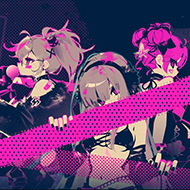
What happens when a rhythm game strips itself down to two buttons and still manages to demand your full attention? That’s the question Muse Dash 2 answers within its first stage, sending Rin sprinting across a scrolling track while enemies approach from the right in perfect time with the music.
| Genre | Rhythm action, side-scrolling |
| Playable Muses | Rin, Buro, and Marija return from the original |
| Core Loop | Hit enemies in time with the beat while switching lanes to dodge and collect |
| New Modes | Rhythm battle multiplayer and additional minigames |
The Core Loop of Muse Dash 2
The fundamentals carry over directly from the original: your Muse runs automatically, and your job is to strike enemies approaching from the front in sync with the music while switching between the top and bottom lanes to dodge obstacles and scoop up rewards. Two inputs handle nearly everything — an air attack and a ground attack — which keeps the barrier to entry low while the difficulty curve on harder tracks stays genuinely demanding.
What Muse Dash 2 changes is scope rather than fundamentals. Animated backgrounds with interactive 3D parallax effects react to the music, and the presentation leans harder into spectacle without touching the two-button core that made the original approachable.
Choosing Your Muse
Rin, the bassist and the character most players start with, returns alongside Buro the pilot — who’s rarely seen without her bear companion Ola — and Marija the violinist. Each Muse carries a distinct health pool and passive skill, and picking one that matches your playstyle matters more on harder charts, where a passive that boosts combo scoring can outperform one built around raw survivability, or vice versa depending on the song’s difficulty spike pattern.
Elfin Companions
Alongside your chosen Muse, an Elfin companion adds a secondary passive effect layered on top of your character choice. Pairing the right Elfin with the right Muse is one of the deeper optimization threads in the Muse Dash series, and Muse Dash 2 carries that system forward rather than simplifying it.
Lane Switching and Combo Building
Moving between the top and bottom lane isn’t just about survival — it’s tied directly to collecting rewards that feed your combo, and a broken combo mid-song can tank a score that was otherwise on track for a personal best. Advanced players learn to plan lane switches several beats ahead rather than reacting note by note.
Rhythm Battle and Multiplayer
Muse Dash 2’s headline new addition is a rhythm battle mode built for multiplayer, letting players go head-to-head rather than only chasing solo high scores. It’s a meaningful structural addition on top of the parkour rhythm foundation, and it gives the sequel a competitive angle the original never really had.
- Casual players tend to stick with relaxing minigame modes to build up their sense of timing before tackling harder charts.
- Score-chasers focus almost entirely on combo optimization and Muse-Elfin pairings.
- Competitive players gravitate straight to rhythm battle mode once they’ve got their fundamentals down.
What Beginners Get Wrong
New players in Muse Dash 2 tend to fixate on hitting notes accurately while ignoring lane positioning entirely, which caps their score even on charts they’re technically clearing without failing. Learning to treat lane switches as part of the rhythm, not a separate task, is the single biggest jump in skill most players make.
Do I need to have played the original Muse Dash first?
No — Muse Dash 2 keeps the same accessible two-button structure, so newcomers can jump straight in, though returning players will recognize Rin, Buro, and Marija immediately.
What’s new in Muse Dash 2 compared to the original?
The headline additions are a rhythm battle multiplayer mode, a new collection of minigames, and significantly upgraded presentation including animated cover art and interactive parallax backgrounds, layered on top of the same core rhythm gameplay.
Does choosing a Muse actually affect difficulty?
Yes — each Muse’s passive skill and health pool change how forgiving a run feels, and matching the right Muse to a given chart’s difficulty pattern is a real part of scoring well rather than a purely cosmetic choice.
Muse Dash 2 doesn’t reinvent what made the original work — it just gives Rin, Buro, and Marija a bigger stage and a multiplayer reason to keep chasing that perfect combo, and that’s exactly the kind of sequel most of the original’s thirteen million players were hoping for.