











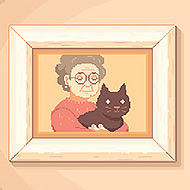
Six Cats Under
 (Пока оценок нет)
 Loading...
Popular tags


Similar Games













Popular tags


Description
Geoffrey, one of the six cats in Six Cats Under, will not move for anything except the sound of a flushing toilet, and figuring that out is most players’ first real puzzle. You are playing as the ghost of a cat lady who just died in her own home, and your only power left is the ability to nudge objects around the house until her cats find their way to the front door and out into freedom.
| Genre | Point-and-click puzzle |
| Platform | Browser, Windows |
| Playtime | Around five to fifteen minutes per full run |
| Core Mechanic | Triggering household objects to lure cats toward the exit |
Freeing the Cats: The Core Loop of Six Cats Under
The premise is simple on paper: six cats are scattered around a cramped apartment, and as a poltergeist you cannot pick them up or carry them anywhere. Instead, you interact with the furniture and appliances around each cat, and the resulting noise, smell, or movement is what actually gets them moving toward the door. A lamp flicker startles one cat off a shelf. A running fan carries a smell across the room to lure a picky eater. None of this is explained with a tutorial popup; you learn it by clicking around and watching what reacts.
That lack of hand-holding is part of why Six Cats Under gets recommended so often in short-game threads. There is no fail state and no timer, so experimentation costs nothing, but the puzzles still require you to notice small details, like a cat flinching at a sound two rooms away or refusing to walk near a specific piece of furniture.
Beginners usually try to brute-force the first cat by clicking everything in the room at once, and it works well enough early on that they carry the habit into later, tighter puzzles where it stops working. By the third or fourth cat, success depends on sequencing two or three objects in the right order rather than just finding the one correct thing to click.
Reading the House Through a Dead Woman’s Belongings
Almost every object you interact with has a short description attached to it, and those descriptions are where the game’s actual story lives. A chipped mug, a stack of unopened mail, a photo on the wall: each one adds a line or two about who this woman was before she died in the apartment you are now haunting. None of it is delivered through cutscenes or dialogue boxes, so players who click through quickly miss most of it.
This is the detail that separates a five-minute speedrun from the version most people actually remember. Reading every item description turns a light puzzle game into something closer to a eulogy, and that tonal shift, from cute poltergeist antics to quiet grief, is something you only really notice once you slow down and read instead of just solving.
Community discussion around Six Cats Under tends to circle back to this exact tension: some players say the combination of a lighthearted puzzle loop with genuinely sad flavor text feels mismatched, while others say that contrast is precisely what makes the five-minute runtime hit harder than it should.
Geoffrey, Pumpkin, and the Rest of the Household
The cats are not interchangeable puzzle pieces; each one has its own quirks that double as the puzzle’s logic. Pumpkin reacts to food-related triggers, Baroness is standoffish and needs to be startled rather than coaxed, and Geoffrey, as mentioned, only responds to specific sounds like the toilet flushing. Mr Spock and Goldie round out the household with their own object dependencies that players end up cataloguing mentally as they go.
- Cats that are asleep usually need a startle-based trigger, like a clock chime or a door creak, rather than a food or scent cue.
- Cats near windows often react to outdoor stimuli, so checking what is visible through the glass matters as much as the furniture inside the room.
- Cats already close to the front door sometimes just need one more nudge, which is easy to miss if you assume they are already finished.
Chain Reactions with the Clock, the Fan, and the Toilet
A handful of objects do double duty across multiple cats: the clock, the ceiling fan, and the toilet each trigger more than one reaction depending on which cat is nearby when you activate them. Once you notice that the fan does not just move air but also carries scent toward whichever cat is downwind, later puzzles start to feel less like guessing and more like using tools you already understand in a new combination.
Completionist players, the type who replay a short game just to squeeze out every interaction, tend to keep a mental list of which object belongs to which cat, and comment sections are full of people trading these makeshift cheat sheets for each other’s benefit.
What Trips Up First-Time Players
The most common complaint in comment sections is not difficulty, since Six Cats Under is short and forgiving, but pacing. Some players finish in under ten minutes without reading a single item description, then go back and replay it slower once they realize how much text they skipped. Others get stuck for several extra minutes on one specific cat because the trigger for that cat is easy to overlook among a room full of clickable clutter.
Players who enjoy cozy, low-stakes puzzle games tend to love the format precisely because there is no penalty for trial and error, and clicking systematically through every object in a room is a valid strategy that never gets punished.
The Cat Everyone Gets Stuck On
Baroness is the name that comes up most often in walkthroughs and comment threads as the one cat people need a hint for, mostly because her trigger is tucked into a corner of the apartment that is easy to skip past on a first pass through the room.
The Ending and Why Players Keep Coming Back
Once all six cats are gathered and the front door finally opens, the game ends quickly, without a long cutscene or an epilogue explaining what happens to the cats afterward. That abruptness is intentional, and it is also one of the more debated aspects of Six Cats Under among players who wanted a slightly longer send-off after spending time reading about the woman’s life.
Even with that short runtime, the game has built a lasting following, with thousands of ratings on itch.io and a strong average score, largely from players who replay it once just to catch item descriptions they missed the first time through.
Story-focused players tend to linger in the empty rooms after the door opens, rereading descriptions now that they know how the woman’s life actually ended, rather than closing the tab the moment the puzzle is solved.
Common Questions About Six Cats Under
- How do you get all the cats out in Six Cats Under? Each cat has its own trigger object somewhere in the apartment, from the clock and fan to the toilet, and getting all six to the front door at once is what ends the game.
- How long does it take to finish Six Cats Under? A fast run without reading descriptions takes around five minutes, while players who stop to read every item’s flavor text often spend closer to fifteen.
- Is Six Cats Under a sad game or a happy one? It plays like a light puzzle game on the surface, but the item descriptions reveal a quietly sad story about the woman who died in the apartment, so most players land somewhere in between.
Six Cats Under earns its reputation as more than a quick browser puzzle, because once Geoffrey, Pumpkin, Baroness, and the rest of the household finally slip out that front door, the empty apartment behind them says more than most games manage in an hour.