


Omega Flowey Simulator
 (1 оценок, среднее: 5.00 из 5)
 Loading...
Popular tags


Similar Games









Popular tags


Description
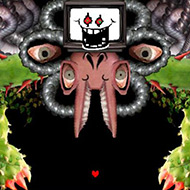
Omega Flowey Simulator looks like a joke at first — a fan project built entirely around one boss fight — but it plays like a genuine bullet-hell test the moment the screen starts glitching and vines start closing in from every direction.
What Omega Flowey Simulator Actually Simulates
The game strips out everything from Undertale’s larger structure — no exploration, no dialogue, no earlier bosses — and drops you directly into a standalone recreation of the confrontation with Omega Flowey. You control your SOUL with simple directional movement, dodging waves of projectiles that escalate in speed and pattern complexity as the fight goes on. There’s no narrative framing beyond the fight itself; interaction starts the moment the session loads.
Reading Attack Phases
Omega Flowey Simulator divides its encounter into repeating phases, each introducing a new attack style or visual distortion that tests a different aspect of your movement. Screen distortion, shifting textures, and abrupt static bursts aren’t purely cosmetic — they’re functional cues meant to help you anticipate incoming patterns before they fully render, and learning to read them through the chaos is most of the actual skill ceiling here.
Some phases reward patience and careful positioning; others punish any hesitation at all, which means memorization alone isn’t enough to consistently clear later waves. You need flexible reflexes layered on top of pattern knowledge.
Bullet Patterns and Fake-Outs
True to the source fight, Omega Flowey Simulator recreates the sense of a boss that breaks its own rules — patterns that appear predictable can shift mid-wave, and fake game-over sequences are part of the game’s design language, mimicking the original encounter’s fourth-wall antics without any actual narrative to support them.
Survival, Sandbox, and Challenge Modes
Depending on which version you’re playing, Omega Flowey Simulator typically offers a straightforward Survival mode focused on lasting as long as possible, a stricter Challenge mode for players chasing cleaner runs, and in some versions a Sandbox mode for experimenting with patterns without the pressure of a real attempt.
What Makes Repeated Runs Feel Different
Even once you’ve memorized the broad phase structure, slight variations in timing and sequencing keep individual runs from feeling identical. That’s a deliberate design choice — familiar patterns return, but not always in the same order or at the same speed, which is enough to keep experienced players from fully autopiloting a run.
- Speed-focused players optimize for surviving as many waves as possible without a single hit.
- Casual fans of Undertale mostly come for the nostalgia of reliving a favorite boss fight outside its original context.
- Challenge-mode players treat later phases almost like a rhythm game, syncing dodges to visual cues rather than reading hitboxes cold.
- Is Omega Flowey Simulator connected to the story of Undertale? No — it’s a fan-made standalone recreation of one specific boss encounter, stripped of the surrounding narrative and RPG systems from the original game.
- What’s the actual goal in Omega Flowey Simulator? Survival — most modes measure success by how long you last or how cleanly you clear a set sequence of attack phases rather than defeating an opponent in a traditional sense.
- Does the game punish memorizing patterns too rigidly? Yes, to an extent — certain waves demand flexible movement and quick decision-making, so relying purely on memorized routes tends to fall apart on later, faster phases.
Omega Flowey Simulator succeeds by committing fully to one idea instead of padding it out, and every distorted texture, every fake game-over screen, and every escalating wave exists purely to test whether you can keep dodging after the game has stopped playing fair.