







Photomaly FullSceen
 (Пока оценок нет)
 Loading...
Popular tags


Similar Games










Popular tags


Description
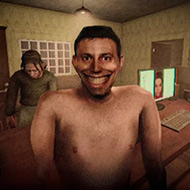
You slide a freshly developed print across the counter, and for a half-second the customer’s face in the photo isn’t quite the one that walked through your door. Photomaly builds its entire horror around that gap between what you saw through the lens and what came back from the darkroom, and once you notice it, you can’t stop checking every print twice.
| Genre | First-person psychological horror simulation |
| Setting | A retro portrait studio inherited from the player’s father |
| Core Loop | Photograph customers, develop film, inspect for anomalies, deliver prints |
| Structure | Sequential night shifts with rising difficulty and multiple endings |
Running the Studio in Photomaly
The job in Photomaly sounds simple on paper: greet whoever walks in, figure out whether they want a passport photo or a portrait, set the lighting, tell them how to pose, and take the shot. In practice, every one of those steps takes physical, first-person effort. You’re the one dragging the tripod into position, flipping the flash on and off, and cranking the studio lights until the exposure looks right. Nothing is automated, and the game leans on that friction to keep you present in the moment instead of clicking through a menu.
Money from each session goes toward restocking film, chemicals, and paper, then toward studio upgrades that improve your equipment and, eventually, the quality of your prints. Skimp on supplies and you’ll be turning away customers mid-shift, which matters more than it sounds like once the game starts throwing tighter deadlines at you.
Between clients, there’s downtime to decorate the workspace, hang prints on the wall, or just breathe before the next knock at the door. That quiet is doing work too — it’s the calm the game needs so the wrongness lands when it shows up.
Spotting Anomalies Before Photomaly Punishes You
The actual skill test in Photomaly is anomaly detection. Every developed photo needs a second look, comparing what’s on the print to what you remember seeing live in the studio. Shadows sit at the wrong angle. A facial feature is subtly off. Something in the background has moved that shouldn’t have. None of it is telegraphed with a jump scare cue — you either catch it or you don’t, and missing it has consequences that ripple into later nights.
Beginners tend to rush this part, treating the darkroom as a formality between customers instead of the actual game. Veterans slow down, print by print, because Photomaly rewards paranoia far more than speed.
Night Shifts and Rising Pressure
Photomaly is structured around sequential night shifts, and each one raises the anomaly frequency while introducing customers who behave a little stranger than the last batch. By the third or fourth shift, the studio starts feeling less like a small business and more like a trap you agreed to walk into every evening.
Customers Who Aren’t Quite Right
Every client in Photomaly comes with a specific photo request and a personality that seems ordinary at first glance. Some ask pointed questions. Some linger too long after their print is done. The studio’s regulars return across multiple nights, and paying attention to who keeps showing up — and how their behavior shifts — is one of the few threads Photomaly gives you toward understanding what’s actually going on with the father’s old business.
You are never told outright who to trust. That ambiguity is deliberate, and it’s the reason players keep comparing notes about specific clients in forums instead of just posting jump scare clips.
Studio Upgrades and Better Equipment
Earnings unlock upgraded camera bodies, better lighting rigs, and printing equipment that reduces the chance of a botched photo. Early on, you’re working with equipment that barely gets the job done; by the later shifts, a fully upgraded studio changes the entire pace of a session, letting you process customers faster while still leaving room to scrutinize each print.
What the Photomaly Community Debates
The most common complaint about Photomaly, even among players who otherwise loved it, is that the full campaign wraps up faster than the premise seems to promise. A lot of reviews describe wanting more variation in the actual photo-taking and editing systems once the twist sets in. That’s a fair criticism, and it’s worth going in expecting a tight, focused experience rather than a sprawling one.
- Players who favor observation over reflexes tend to get the most out of the anomaly-spotting loop.
- Speedrunners chase clean shifts with zero missed anomalies, which is a much harder bar than it sounds.
- Story-focused players replay specific nights just to catch dialogue they rushed past the first time.
Multiple Endings in Photomaly
Your accuracy across the campaign — how many anomalies you actually caught versus missed — feeds directly into which ending you get. That single mechanic is why players run the game back more than once, since a careless first playthrough tends to close off the better outcomes.
What Photomaly Actually Wants From You
Once you understand that the game is testing memory and attention rather than reflexes, the whole experience clicks into place. It’s not about surviving encounters; it’s about noticing when reality stopped matching the photo.
Do I need to catch every anomaly to get a good ending in Photomaly?
Not every single one, but your overall accuracy across the campaign is tracked and directly affects which ending you receive, so consistent attention matters more than any one perfect shift.
Why does my mouse keep drifting in Photomaly?
Some players have reported unintended cursor drift, particularly outside of Windows, which is a known point of frustration rather than an intended anomaly — it’s worth adjusting sensitivity settings if it happens to you.
Is Photomaly a long game?
No — most players finish the full campaign in a single extended sitting, and the studio setting is deliberately compact so the tension doesn’t have room to dilute.
By the time you’ve sat through your last night shift, Photomaly has trained you to distrust your own eyes, and that’s the whole point. The studio itself, the flash bulb, the smell of chemicals implied by every darkroom sequence — it all builds toward one simple, unsettling habit: look at the print twice before you hand it over.