









Don’t Sleep with the Fishes
 (Пока оценок нет)
 Loading...
Popular tags


Similar Games














Popular tags


Description
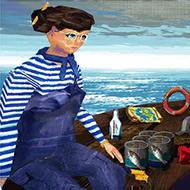
Don’t Sleep with the Fishes looks like a cozy fishing game from the title screen and plays like a countdown to a decision you’re not prepared to make. You’re the captain of a ship on a covert delivery run, and within minutes something strikes the hull hard enough that the emergency horns start blaring before you’ve even finished exploring your own cabin.
| Genre | Point-and-click survival horror |
| Setting | The open ocean, aboard a sinking ship and then a lifeboat |
| Core Loop | Salvage items, manage energy, survive nights, reach the lifeboat |
| Endings | Multiple, determined by choices and preparation |
The Sinking and the Scramble
Once the horns sound in Don’t Sleep with the Fishes, you have a strict window to grab whatever you can from the ship and toss it into your lifeboat before the vessel goes under. Every item counts, and there’s no time to be thorough — you’re prioritizing on the fly, guessing at what will matter later without knowing yet what “later” even looks like. Staying too close to a sinking room, or too far from the boat when time runs out, ends your run before it properly starts.
What you manage to salvage in those frantic minutes shapes your entire options list for the rest of the game, which is why replaying with a different salvage priority produces a noticeably different experience.
Days at Sea: Energy and Survival
Once you’re adrift, the game shifts into a day-night rhythm. Daytime hours are spent fishing, eating, doing small tasks, or talking with a shipmate if you brought one along — each of these costs energy, and once you’re out, the day ends whether you’re ready or not. Managing that energy budget carefully is the core survival skill Don’t Sleep with the Fishes is testing, and burning it recklessly on one good day tends to catch up with you a night or two later.
Fishing in particular pulls double duty, since it’s both a food source and one of your only proactive ways to prepare for whatever the night throws at you.
Nights, Events, and the Kraken
Sleep is never guaranteed to be uneventful. Interrupted nights present a specific event, and you’ll need to have brought the right item to resolve it — the game bluntly tells you “you are unprepared” if you didn’t, leaving going back to sleep as your only remaining option. Some events reference earlier story beats, including whether you survived an encounter with something the community refers to as the Kraken, and having that history changes which later events can even trigger.
These nighttime encounters are randomized within limits, so no two survivors experience quite the same string of crises, which is a big part of why the game supports repeated runs despite its short average length.
Your Shipmate
Bringing a shipmate along gives you someone to talk to during the day, which helps manage the psychological weight of the situation as much as any practical resource does. Different shipmates bring different conversations and reactions to events, and players frequently debate which one pairs best with a cautious playthrough versus a riskier one.
Choices That Actually Matter
Don’t Sleep with the Fishes leans harder on narrative decision-making than most survival games in its genre. Conversations regularly branch into multiple responses, and those responses feed into how later events play out and which of the game’s endings you land on. The uncertainty is deliberate — you’re rarely given an obviously correct answer, and that ambiguity is exactly what makes each choice feel like it carries weight.
- Cautious players tend to hoard salvage and ration energy tightly across every day.
- Players chasing specific endings often replay the opening salvage sequence with a fixed shopping list in mind.
- Community discussion frequently centers on which items are “always worth grabbing” during the initial scramble.
What players end up debating most is how brutal the odds actually are — in most playthroughs you don’t survive, and that’s stated plainly rather than hidden, which some find bracing and others find punishing for a roughly hour-long experience. Either way, it’s a deliberate design choice rather than an oversight, and it’s worth knowing going in. As for what item saves you during a specific night event, that depends entirely on which event fires — the lifeboat you filled during the sinking is effectively your answer key, and whether you packed correctly during those frantic first minutes decides whether you have a response at all when the game demands one.
Escaping isn’t guaranteed in Don’t Sleep with the Fishes, and it isn’t supposed to be. What the emergency horns start, only your lifeboat and whatever you managed to throw into it get to finish, and that’s a tension few games in this genre commit to as fully.