










Noble – Family Tree Sim
 (Пока оценок нет)
 Loading...
Popular tags


Similar Games












Popular tags


Description
What happens when three generations of careful, calculated marriages finally produce an heir who inherits every weak trait you spent decades breeding out of the bloodline? That is the exact kind of moment Noble – Family Tree Sim is built around, and it happens often enough that most players have a story about the one heir who nearly ended their entire house.
| Genre | Genealogy simulation |
| Platform | Windows, Steam Early Access with a public demo |
| Core Mechanic | Genetics-based marriage and lineage management across generations |
| Houses | Sapwood, Wincestor, Krankhaus, Salestor |
The Four Houses of Noble – Family Tree Sim
House Sapwood: built around fertility, its starting genes favor large families and quick succession, easier to recover from early setbacks but with less room for careful trait selection. House Wincestor: leans on influence and political weight, so its nobles start weaker biologically but open alliances other houses have to earn the slow way. House Krankhaus: centers on health and endurance, producing nobles who survive plagues and hard winters that would wipe out a Sapwood line at the same stage. House Salestor: trades raw survivability for cleverness, rewarding players who plan generations ahead instead of reacting to the current heir.
New players almost always pick Sapwood first, because a house that produces heirs quickly forgives early mistakes in a way the other three do not. That is also why veteran players graduate to Wincestor or Salestor once they understand how genetics interact between houses through marriage.
By the time your family reaches its third or fourth generation, the starting house matters less than the marriages you arranged along the way, since Noble – Family Tree Sim tracks six alleles per gene and lets recessive traits resurface unpredictably after generations of careful pairing.
Genetics, Marriages, and the Slow Grind of Nobility
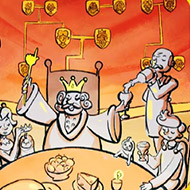
Every noble carries visual and mental traits from a real underlying genetics system, not a random stat roll. Marrying into another house is not just a political move, it is a genetic gamble, and players learn to check a prospective partner’s family history before locking in an alliance that could strengthen a line or quietly ruin it two generations later.
Resources sit underneath all of this and rarely get enough credit in how the game is discussed. Barons collect provisions to keep their household fed, while counts and higher-ranked nobles manage taxes instead, and letting either slide is a common way a promising family line collapses before any bad marriage gets the blame.
Feasts, Wars, and Tourneys
Sending nobles to feasts, wars, and tourneys is where most of the story-generation happens. A tourney can make a minor lord’s reputation or get him killed, a feast can start or end an alliance depending on who insults whom, and war is the fastest way to lose an heir raised over twenty years. Players who enjoy min-maxing weigh every event outcome carefully, while others send nobles into risky situations just to see what happens.
What Early Access Players Are Debating
Being early access, Noble – Family Tree Sim still has rough edges players bring up regularly, particularly around how unpredictable genetics can feel when a pairing that looked safe on paper still produces an unhealthy heir. Some see that unpredictability as the entire point, since a guaranteed outcome would make marriage decisions boring, while others want more visible information before committing a match.
Reception has still been strong for a game in this state, with the public demo sitting at a Very Positive rating from recent players, and that early goodwill keeps drawing new players in between updates.
Common Questions About Noble – Family Tree Sim
- How does genetics work in Noble – Family Tree Sim? Each noble has genes built from six alleles, and traits both visual and mental are inherited from parents, meaning recessive traits can resurface generations later even in a carefully managed line.
- Which house is best for a first playthrough? House Sapwood is the common recommendation for new players because its fertility-focused genetics produce heirs quickly, giving you room to recover from early mistakes that would cripple a Krankhaus or Salestor line.
- How do you keep a family line from dying out? Balancing provisions and taxes while arranging marriages that account for genetic compatibility, not just political convenience, is the main way experienced players keep a house from collapsing after a few unlucky generations.
Noble – Family Tree Sim keeps every choice, from picking House Sapwood over Wincestor to sending a favorite lord off to a risky tourney, tied directly into a genetics system that makes each family tree feel like it earned its own shape rather than following a script.